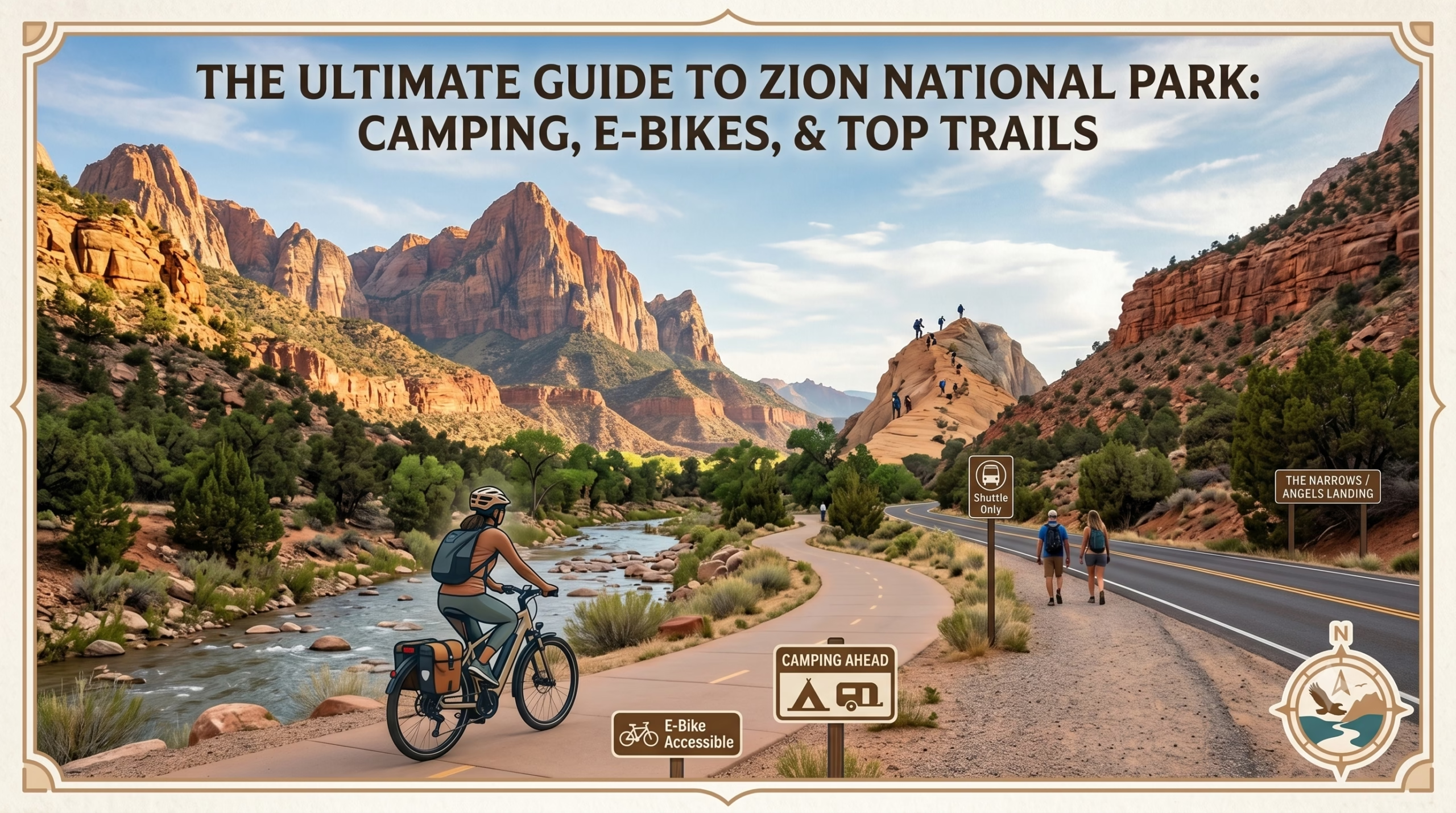
The electric bicycle revolution has completely transformed how we explore the outdoors. Whether you are using an ebike to flatten out the grueling climbs on your local trails or utilizing one to see a national park without the gridlock of a car, these machines offer unparalleled access to nature.
However, because ebikes blur the line between traditional bicycles and motorized vehicles, navigating where and how to ride can be confusing. To ensure your next ride is smooth, legal, and safe, you need to understand the mechanics of your bike, the rules of the trail, and how to transport your heavy gear.
1. Understanding the Rules: The Three Ebike Classes
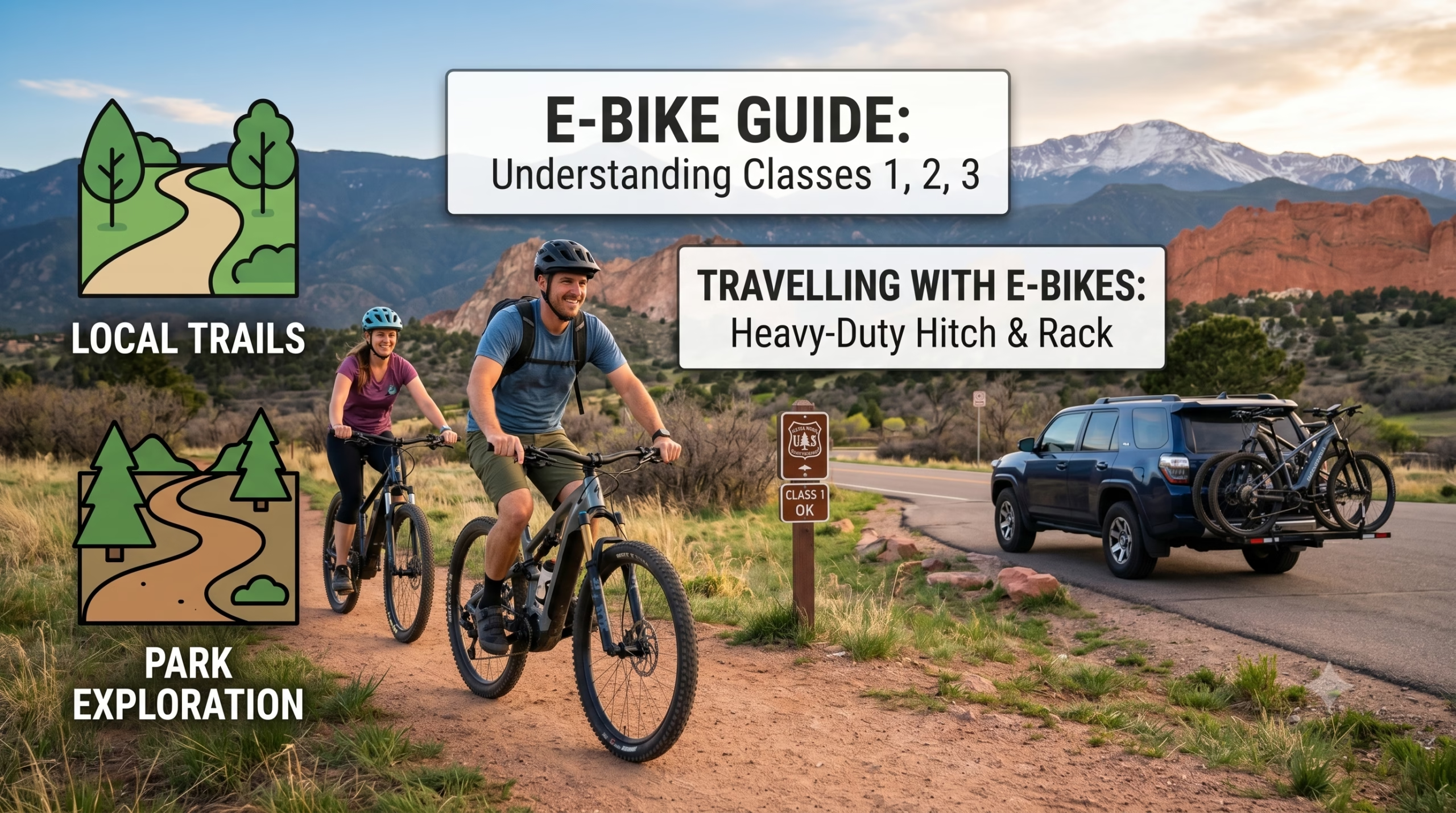
Before you pack up your gear, you must know what “Class” your ebike falls into. The United States largely recognizes a standard three-tier classification system, and trail access is almost entirely dictated by these definitions.

- Class 1 (Pedal-Assist Only): The motor only kicks in when you are actively pedaling and cuts off completely once you reach 20 mph. Class 1 ebikes enjoy the broadest access on public lands and are generally treated exactly like traditional mountain bikes.
- Class 2 (Throttle-Assisted): These bikes feature a thumb-throttle or twist-grip that allows the bike to propel itself without you pedaling at all, capping out at 20 mph. Because of the throttle, they are occasionally banned from singletrack mountain bike trails but are widely permitted on paved multi-use paths.
- Class 3 (High-Speed Pedal-Assist): These are built for commuting, providing pedal assistance up to 28 mph. Because of the massive speed differential, Class 3 bikes are strictly restricted from most multi-use recreational trails and are usually confined to standard road bike lanes.
State-Specific Warning: While 45 states use this framework, laws shift constantly. For example, New Jersey recently abolished the three-class system entirely, reclassifying all ebikes as motorized vehicles requiring registration and insurance. Always check local regulations before heading out.
2. Conquering Local Trails and Greenways
For daily riding, local multi-use paths, rail-trails, and singletrack networks are the ultimate playground. Riding an ebike locally keeps you active, but it requires serious trail etiquette.
Managing Speed Differentials
The biggest point of friction on local city trails is speed. Multi-use greenways are shared with joggers, children, dogs, and traditional cyclists. Many municipal parks enforce a strict 15 mph speed limit on shared paths, regardless of what class your ebike is. When passing pedestrians, always slow down to a safe speed, give an audible warning with a bell or your voice, and yield the right-of-way.
Singletrack and Dirt Trails
If you are taking an electric mountain bike (eMTB) onto local dirt singletrack, look closely at the trailhead signs. If a trail is marked explicitly as non-motorized, Class 1 ebikes are frequently allowed, but Class 2 and 3 models are usually prohibited.
3. Traveling and Riding Within National Parks
Taking an ebike into a National Park or onto Bureau of Land Management (BLM) land is one of the best ways to experience America’s iconic landscapes. It allows you to skip the nightmare of crowded parking lots and experience the scenery completely open to the elements.
The Federal Framework
The National Park Service (NPS) explicitly permits ebikes to operate wherever traditional bicycles are allowed. This includes paved park loops, public roads, and designated bike paths.
However, there are two strict boundaries you must respect:
- No Wilderness Access: Just like traditional mountain bikes, ebikes are strictly banned from designated federal wilderness areas.
- Superintendent Discretion: The NPS leaves final trail rules up to individual park superintendents. A dirt trail that allows ebikes in Utah’s Zion National Park might be closed to ebikes in Wyoming’s Grand Teton. Always check the official park website (
.gov) before your trip.
4. The Logistics: Transporting Your Heavy Rig
The freedom of riding in distant state and national parks is incredible, but getting your ebikes there poses a serious logistical challenge.
Unlike traditional analog bicycles that weigh 20 to 30 pounds, an ebike packed with a battery, robust frame, and motor easily weighs between 50 and 80 pounds. Standard trunk-mounted or roof-mounted bike racks will structurally fail under this kind of weight.
To travel safely, you absolutely must use a heavy-duty, platform-style hitch rack rated specifically for ebikes. This setup requires a solid receiver on your car. If your vehicle doesn’t have one, you can install a heavy duty vehicle hitch receiver designed to handle heavy tongue weight loads. Pairing that with a specialty ebike hitch rack ensures your expensive bikes remain entirely secure while driving down bumpy forest service roads or cruising at highway speeds.
5. Essential Ebike Etiquette for the Road
No matter where you choose to ride, keeping public lands open to ebikes depends on rider behavior. Keep these quick tips in mind:
- Protect the Battery: Keep your battery out of direct, blazing sunlight when parked at park vistas.
- Watch the Weather: Heavy eMTBs can cause deeper ruts than regular bikes on muddy trails. If a local singletrack trail is wet and fragile, stay on the pavement to prevent erosion.
- Yield Curiously: When encountering equestrians (horses) on multi-use trails, stop completely, step off your bike on the downhill side of the trail, and ask the rider how to safely proceed. The silent hum of an ebike motor can easily spook a horse.
By matching the right ebike class to the right trail, respecting local speed limits, and securing your rig safely for the highway, you can enjoy a lifetime of seamless outdoor adventure.
For a visual breakdown of how these rules apply in real time, you can check out this comprehensive E-Bike Law Updates Video which highlights how states are actively updating safety and enforcement regulations for riders.
Explore our latest tips, guides, and gear recommendations to help plan your next great outdoor adventure.
- E-Bike Accessories Checklist for Comfortable Travel: The Over-50 Comfort & Utility Guide
- Best Hiking Gear for Beginners Over 50: Trail Essentials for Comfort & Support
- Why Gyms Can’t Replicate the Trail: How Hiking Enhances an Active Lifestyle
- Electric Bike Basics Guide: Classes, Trails, Parks, & Safe Traveling
- Behind the Scenery: What It’s Actually Like to Experience Zion by Tent and E-Bike