For anyone planning an escape into nature, the very first logistical fork in the road isn’t what gear to pack or what food to prep. It’s a fundamental question of philosophy: Do you want a managed campground, or do you want to head out into the middle of nowhere?
In the world of outdoor recreation, this is the classic showdown between Dispersed Camping (primitive, off-grid camping on public land) and Developed Campgrounds (managed, structured sites with amenities).
Both styles of sleeping under the stars offer profound therapeutic benefits, providing a valuable “liminal space” where the relentless boundaries and stressors of modern daily routine dissolve (Huang, 2026). Yet, they offer completely different experiences.
1. The Core Philosophy: Freedom vs. Convenience
To choose the right trip, it helps to understand exactly what sets these two styles apart.
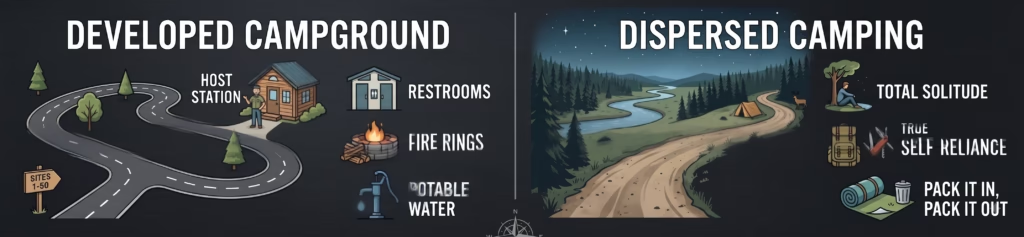
Dispersed Camping: The Unconfined Frontier
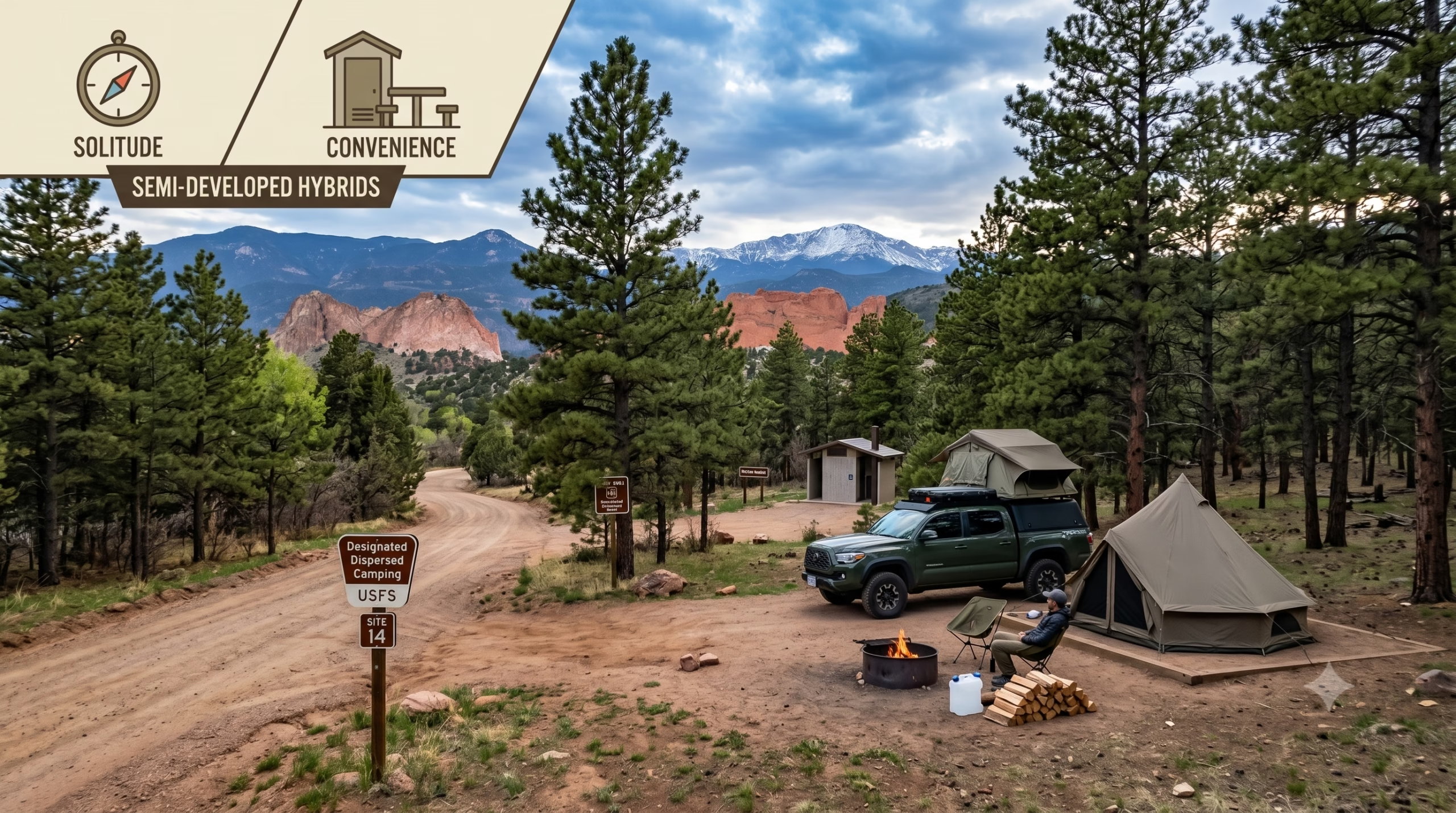
Dispersed camping means camping on public land—typically Bureau of Land Management (BLM) land or United States Forest Service (USFS) territory—outside of a designated, managed campground. There are no reservation systems, no paved loops, no numbered posts, and absolutely no hookups. You drive or hike down a secondary dirt road, locate an area that looks durable, and pitch your tent.
Developed Campgrounds: The Structured Escape
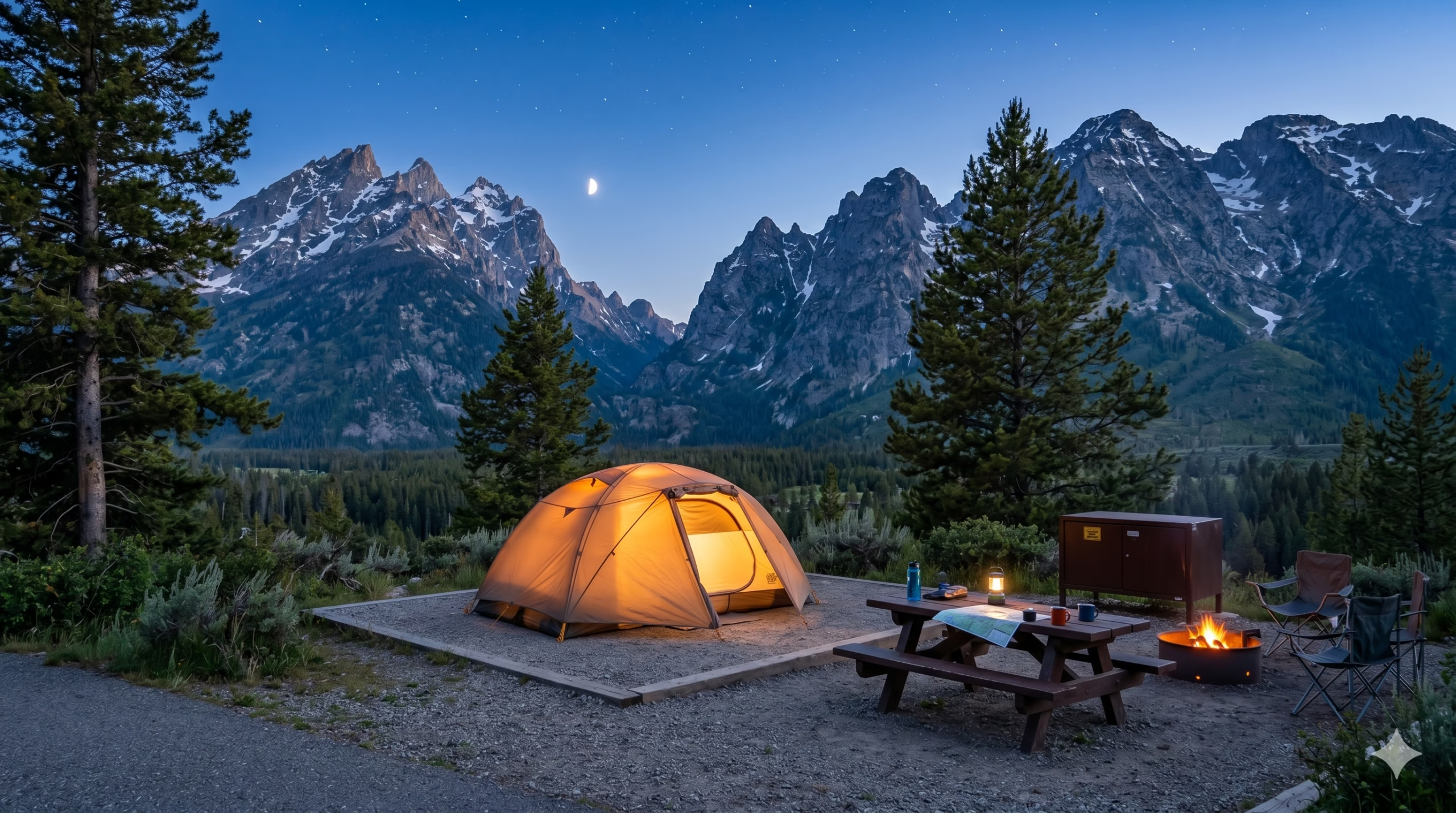
Developed campgrounds are the dedicated outdoor spaces we all grew up with in State Parks, National Parks, and private KOAs. These sites feature designated parking spurs, clear tent pads, fire rings, picnic tables, and varying levels of shared infrastructure ranging from rustic vault toilets to pressurized hot showers and electrical hookups.
2. Head-to-Head Comparison
Choosing between these two options is a balancing act of priorities. If you value a hot shower at 8:00 PM, a dispersed site will feel like a survival trial. If you value absolute silence, a developed campground might feel like an overcrowded parking lot.
| Feature | Dispersed Camping | Developed Campgrounds |
| Cost | Free (99% of the time) | $15 to $50+ per night |
| Reservations | None. First-come, first-served. | Required months in advance for popular spots. |
| Amenities | None. No water, toilets, trash cans, or electricity. | Restrooms, picnic tables, fire rings, often potable water. |
| Privacy / Solitude | High to Absolute. Neighbors are usually miles away. | Low to Moderate. Neighbors are often within sight and sound. |
| Safety Net | Low. You are entirely on your own; cell service is rare. | High. Camp hosts, rangers, and nearby campers are present. |
| Skill Required | Intermediate to Advanced (Navigation, Waste Management). | Beginner friendly. Minimal outdoor experience needed. |
3. Deep Dive: The Pros and Cons of Going Dispersed
Dispersed camping has exploded in popularity, driven largely by a massive surge in people seeking true nature immersion on public lands (Shartaj et al., 2022). But the ultimate freedom comes with a steep learning curve.
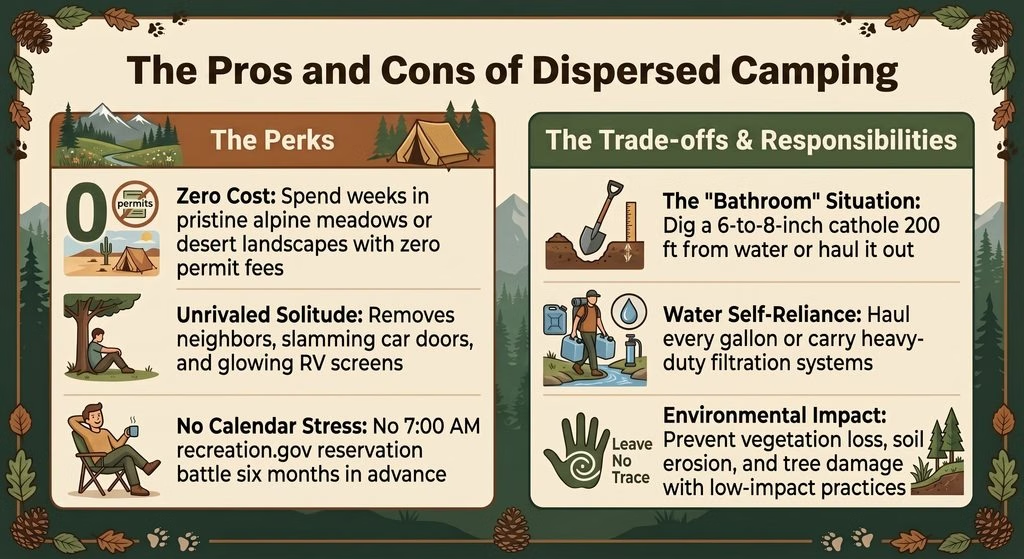
The Perks
- Zero Cost: You can spend weeks in pristine alpine meadows or sweeping desert landscapes without spending a single dollar on permit fees.
- Unrivaled Solitude: High campsite proximity in traditional parks can deeply diminish your sense of solitude (Marion, n.d.). Dispersed camping removes the neighbors, the slamming car doors, and the glow of your neighbor’s RV television.
- No Calendar Stress: You don’t have to sit at your computer at 7:00 AM exactly six months in advance trying to secure a recreation.gov reservation.
The Trade-offs & Responsibilities
- The “Bathroom” Situation: You must safely bury human waste in a 6-to-8-inch deep “cathole” at least 200 feet away from water sources, or haul it out entirely in areas where pack-out laws apply.
- Water Self-Reliance: There are no spigots. You must haul in every gallon of water you need for drinking, cooking, and cleaning, or bring heavy-duty filtration systems to treat natural water sources.
- Environmental Impact: Because visitors are free to select and create campsites at will, unconfined camping can lead to severe localized environmental degradation, including vegetation loss, soil erosion, and damage to local trees if low-impact principles aren’t strictly observed (Arredondo et al., 2021; Marion, 2016).
4. Deep Dive: The Pros and Cons of Developed Campgrounds
For many adventurers, the infrastructure of a managed campground isn’t a distraction from nature—it’s the framework that makes enjoying nature possible.
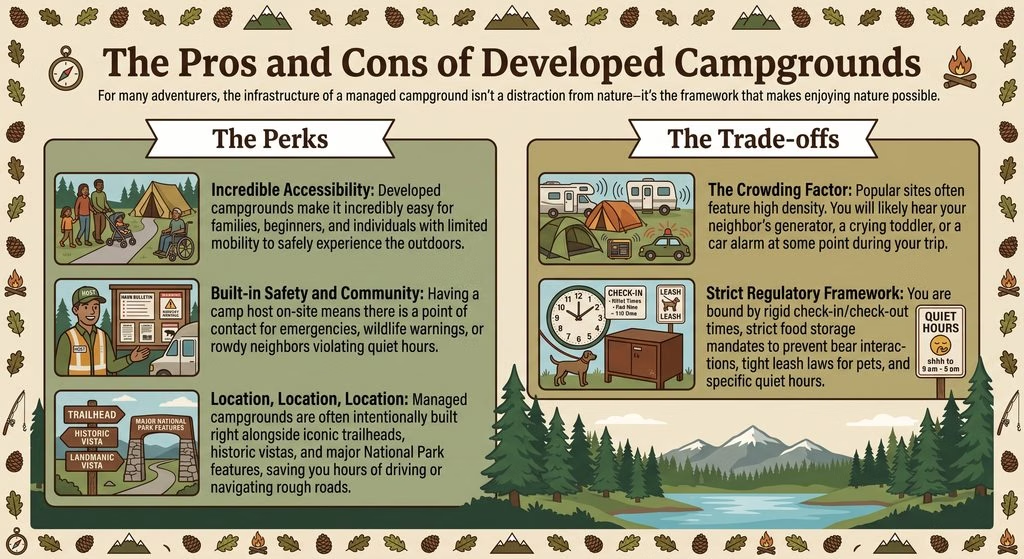
The Perks
- Incredible Accessibility: Developed campgrounds make it incredibly easy for families, beginners, and individuals with limited mobility to safely experience the outdoors.
- Built-in Safety and Community: Having a camp host on-site means there is a point of contact for emergencies, wildlife warnings, or rowdy neighbors violating quiet hours.
- Location, Location, Location: Managed campgrounds are often intentionally built right alongside iconic trailheads, historic vistas, and major National Park features, saving you hours of driving or navigating rough roads.
The Trade-offs
- The Crowding Factor: Popular sites often feature high density. You will likely hear your neighbor’s generator, a crying toddler, or a car alarm at some point during your trip.
- Strict Regulatory Framework: You are bound by rigid check-in/check-out times, strict food storage mandates to prevent bear interactions, tight leash laws for pets, and specific quiet hours.
5. The Environmental Reality: Leave No Trace
Both styles of camping alter the landscape, but they require different conservation mindsets.
Because developed campgrounds use a containment strategy, land managers intentionally sacrifice a small footprint of land—hardening it with gravel, asphalt, and timber—to protect the surrounding forest (Marion, 2016). When you stay in a campground, your job is simply to keep your impact inside that designated box.
Dispersed camping requires a true dispersal mindset. To keep these beautiful public lands open and free, campers must practice strict pristine-site ethics (Arredondo et al., 2021):
- Camp only on durable surfaces like gravel, rock, or dry grass to prevent long-term vegetation loss.
- Never build new fire rings out of rocks; use a portable fire pan or stick to a camp stove.
- Pack out absolutely everything, including organic food scraps like apple cores and banana peels, which can take years to decompose in arid environments and disrupt local wildlife patterns.
6. The Missing Link: Why Your Gear Choice Dictates Your Location
Ultimately, the boundary between a miserable weekend and an unforgettable adventure comes down to self-reliance. When you opt for a developed campground, the infrastructure acts as your safety net. When you venture into semi-developed primitive sites or total wilderness dispersal, your gear becomes your infrastructure.
To successfully bridge the gap, you need to audit your pack for a few non-negotiables.
Off-Grid Power & Illumination
At a developed site, you might have an electrical pedestal or the ambient glow of a restroom facility. Out here, when the sun drops behind the mountains, the darkness is absolute. Reliable illumination is paramount. A high-lumen headlamp like the Black Diamond Spot 400-R, or a rugged rechargeable camp lantern like the Black Diamond Moji R + Lantern transforms a pitch-black campsite into a highly functional living space. If you plan to stay out for more than a night or two, investing in a portable power bank like the Udpower S1200 solar power station or the Ecoflow River 2 Pro Power Station (this is the one we use) ensures your navigation devices and emergency communication tools stay fully charged.
Water Filtration & Storage
You cannot rely on a campground spigot when you’re exploring National Forest roads. The rule of thumb for off-grid camping is one gallon of water per person, per day—plus extra for cooking, cleaning, and pets. Heavy-duty, BPA-free collapsible water bags like MSR Dromedary Bags are essential for hauling your baseline supply in your vehicle. However, because weight is always a factor, you should always carry a backup water filter like the Katadyn Hiker Pro or gravity purification system to safely harvest water from nearby rivers and streams.
The Camp Kitchen & Waste Management
Without a concrete campground picnic table, your kitchen setup needs to be highly efficient and completely self-contained. A stable, dual-burner like Camp Chef Kodiak (this is the one we use) allows you to cook complex meals anywhere without needing to build a campfire.
And remember: if there isn’t a dumpster on-site, you are bound by strict Leave No Trace principles. A heavy-duty set of or scent-proof bags ensures that you can seamlessly pack out every single scrap of food waste, keeping the wild spaces pristine for the next adventurer.
Pro-Tip: Before heading out into the backcountry, assemble and test all your gear in your backyard or living room. The middle of a cell-service dead zone during an unexpected rainstorm is the worst possible place to discover a missing tent pole or a faulty stove regulator!
The Verdict: Which One Is for You?
Choose a Developed Campground if you are introducing young kids to the outdoors, testing out brand-new gear for the first time, traveling in a standard sedan with low ground clearance, or simply want the peace of mind that comes with a guaranteed toilet and a camp host.
Choose Dispersed Camping if your vehicle can handle rough, unmaintained dirt roads, you possess the gear and knowledge to be entirely self-sufficient for days at a time, and your primary goal is to find a quiet, uncrowded pocket of the wilderness where the only sounds are the wind and the wildlife.
References
- Arredondo, J. R., Marion, J. L., Meadema, F. P., & Wimpey, J. F. (2021). Modeling areal measures of campsite impacts on the Appalachian National Scenic Trail to enhance ecological sustainability. Journal of Environmental Management, 279, 111693. https://doi.org/10.1016/j.jenvman.2020.111693
- Cited by: 36
- Huang, Q. (2026). Camping in urban parks as a public health-oriented therapeutic landscape experience accomplished through self-transformation. Frontiers in Public Health, 14, 1794375.
- Marion, J. L. (n.d.). An assessment of campsite conditions in Great Smoky Mountains National Park. U.S. Geological Survey.
- Cited by: 31
- Marion, J. L. (2016). Applying recreation ecology science to sustainably manage camping impacts. University of Montana.
- Cited by: 36
- Shartaj, M., Suter, J. F., & Warziniack, T. (2022). Summer crowds: An analysis of USFS campground reservations during the COVID-19 pandemic. PLOS ONE, 17(1), e0261833. https://doi.org/10.1371/journal.pone.0261833
- Cited by: 14
Explore Camping & National Park Guides
The Ultimate Guide to Tent Camping in National Parks: Regulations, Booking, & Easy Spots
There is a raw, unmatched magic to unzipping a tent door and stepping directly into…
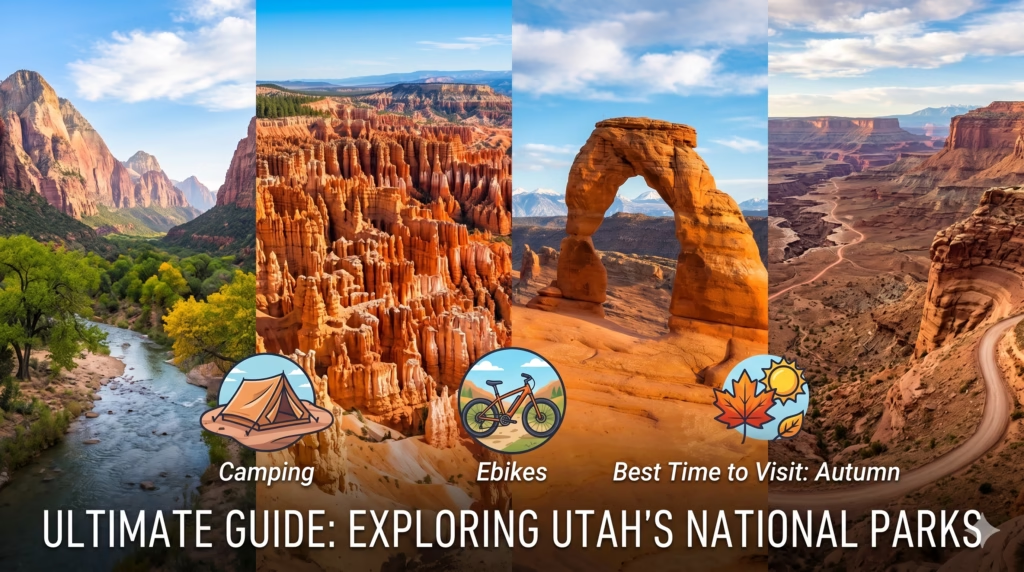
The Ultimate Guide to Utah’s National Parks: Camping, E-bikes, and Scenery
Utah is home to the “Mighty 5″—a collection of five spectacular national parks that contain…
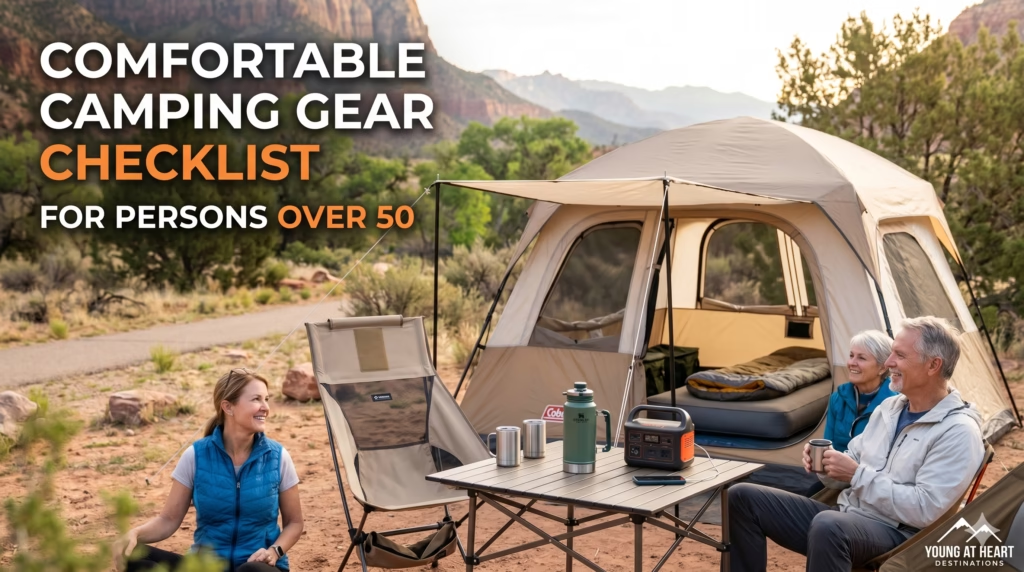
Camping Gear Checklist for Comfortable Travel: The Over-50 Luxury Basecamp Guide
Sleeping under the stars shouldn’t mean waking up with a sore back, a stiff neck,…