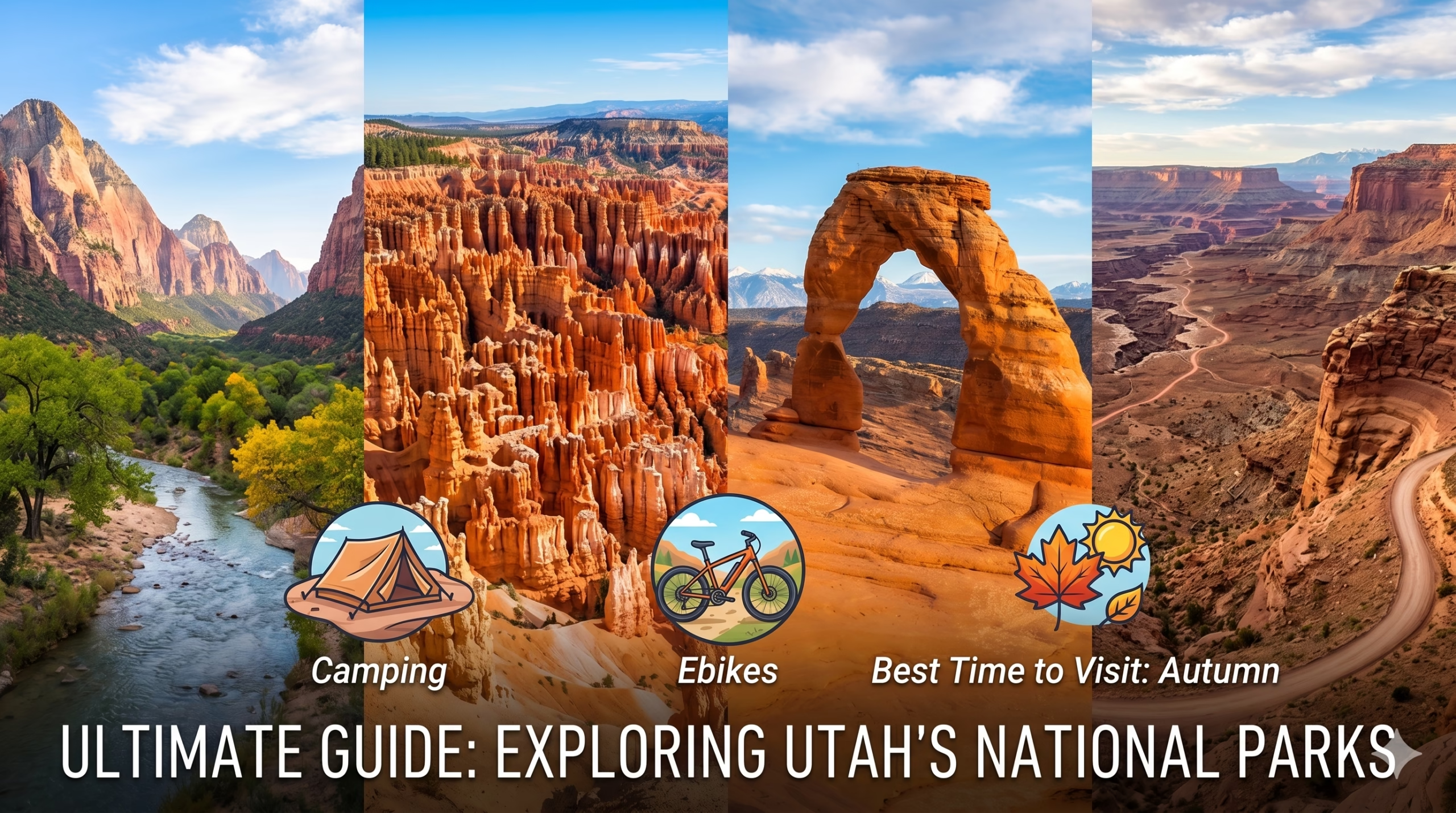
Utah is home to the “Mighty 5″—a collection of five spectacular national parks that contain some of the most surreal, otherworldly geology on the planet. From soaring sandstone monoliths to labyrinthine canyons, this region is an outdoor enthusiast’s paradise.
Planning a road trip through Utah’s national parks requires balancing camping logistics, seasonal weather variations, and understanding how to explore them on two wheels.
1. Zion National Park
- The Best Time to Visit: Late spring (April to May) and mid-autumn (October to November). Summer brings oppressive heat exceeding 100°F (38°C) and flash flood risks during the monsoon season. Winter is peaceful but can bring icy trail conditions.
The Scenery
Zion is all about vertical grandeur. Instead of looking down into a canyon, you stand on the canyon floor looking up at sheer, 2,000-foot cream, pink, and red sandstone cliffs. Iconic formations like Angels Landing, The Great White Throne, and the weeping walls of the Virgin River define this dramatic landscape.
Camping Potential
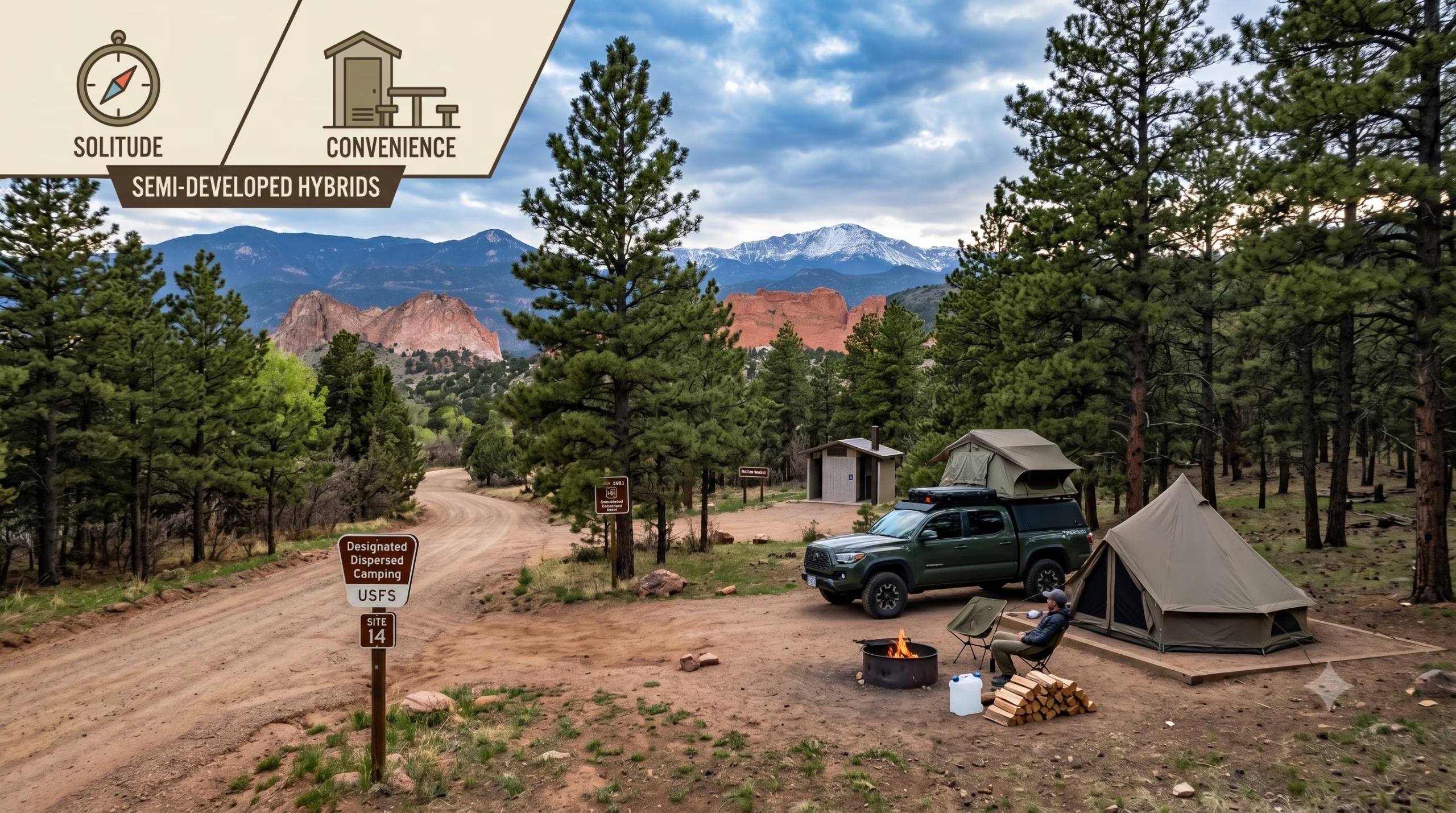
- South and Watchman Campgrounds: Located right inside the South Entrance near Springdale. Watchman is open year-round and has electric hookups (reservations open 6 months in advance). South Campground undergoes rolling renovations, so always check active availability.
- Lava Point Campground: A primitive, high-elevation campground off Kolob Terrace Road, open seasonally (typically May through September)—perfect for escaping the summer heat.
🗺️ Read our personal experience at Zion National Park. Behind the Scenery: What It’s Actually Like to Experience Zion by Tent and E-Bike
E-Bike Options
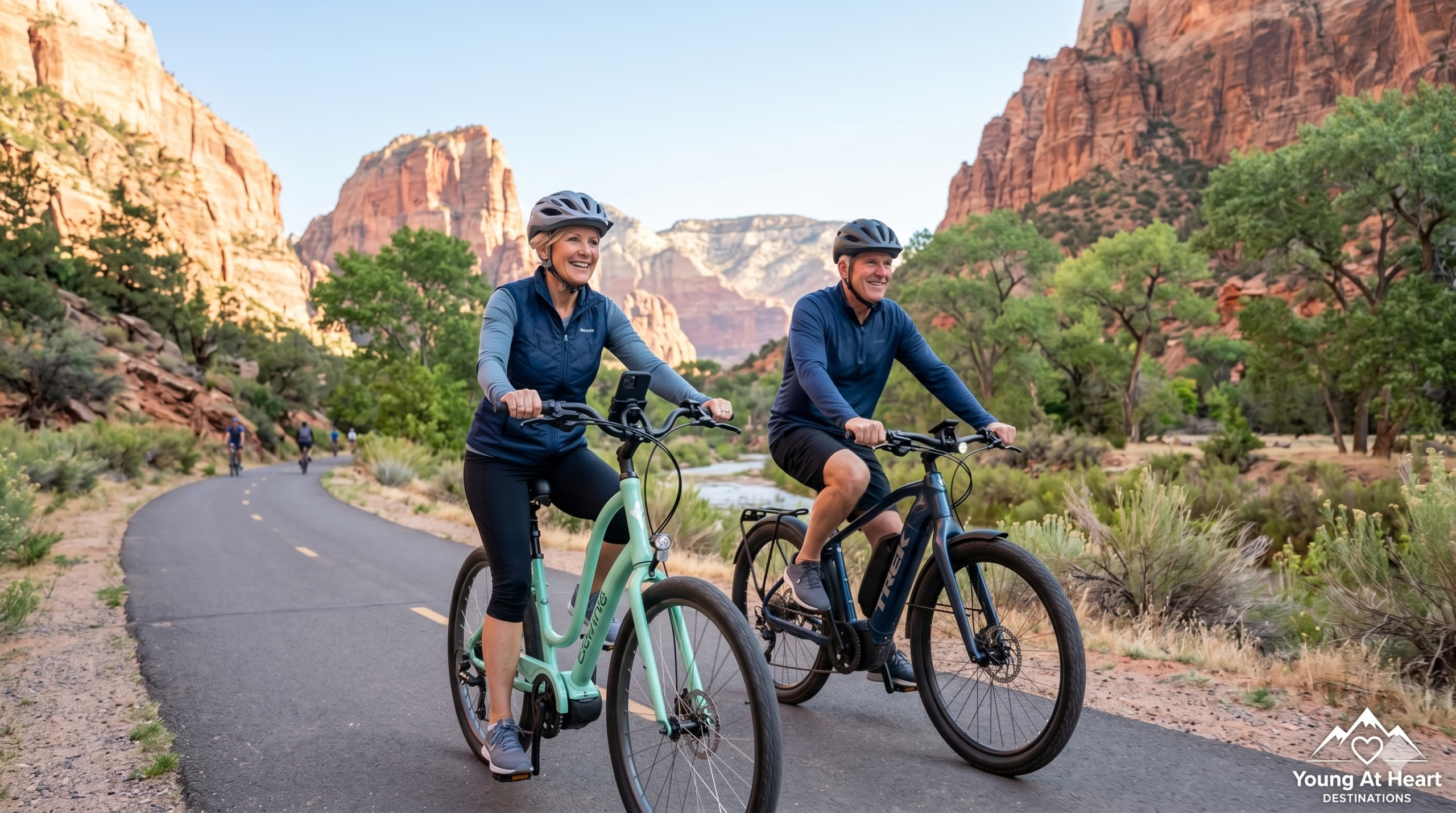
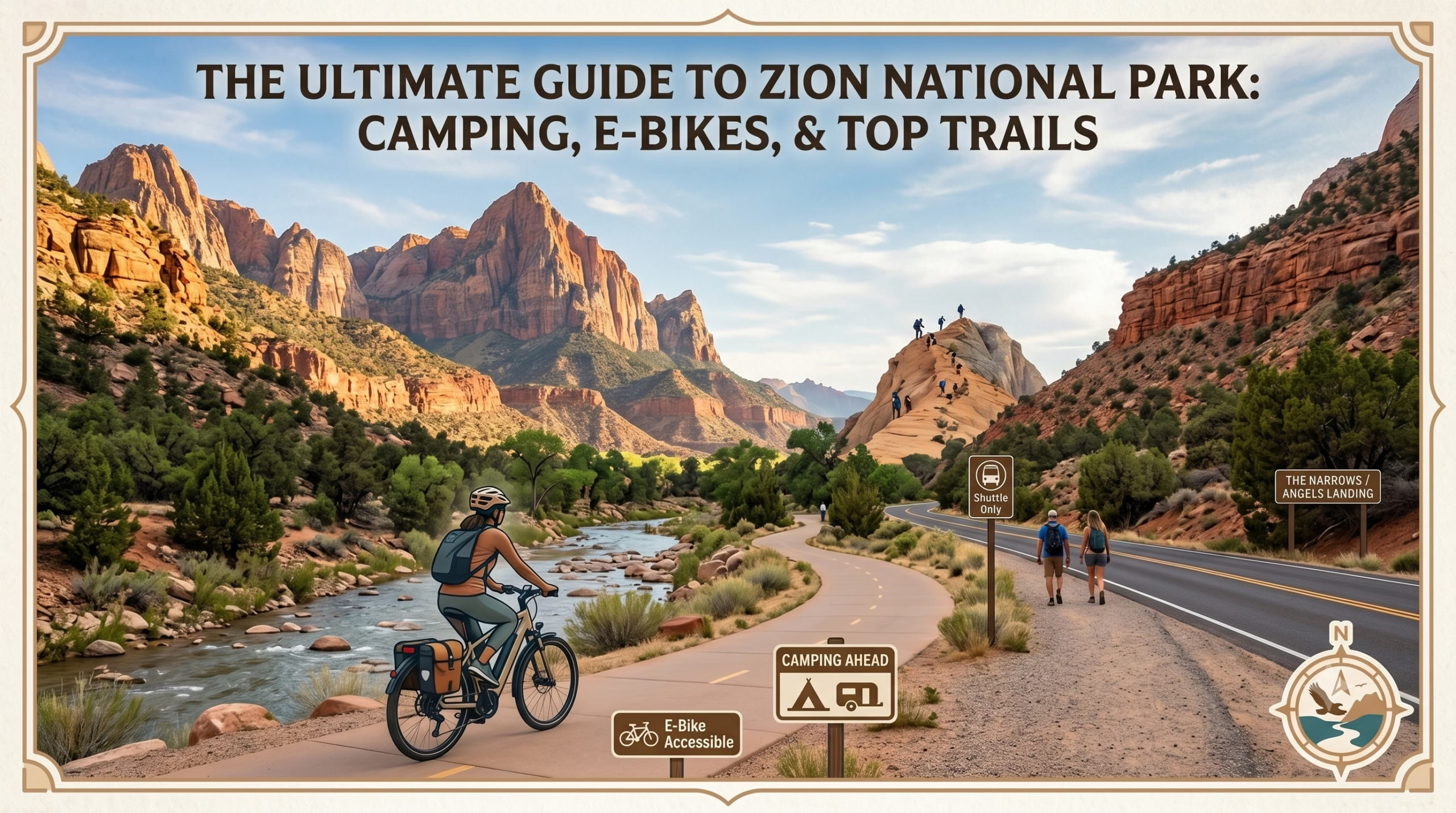
Zion is arguably the premier e-bike destination in the entire National Park System. Because the main Zion Canyon Scenic Drive is closed to private vehicles for most of the year, cycling allows you to bypass the crowded shuttle lines entirely.
- The Rules: Only Class 1 (pedal-assist, no throttle) e-bikes are legally permitted. They are allowed on all paved roads and the paved Pa’rus Trail.
- Important Protocol: E-bikes are strictly banned on hiking trails. When a park shuttle approaches from behind, cyclists are required to pull over to the side of the road and come to a complete stop to let the bus pass safely. Local outfitters in Springdale offer abundant rental options.
2. Bryce Canyon National Park
- The Best Time to Visit: May through September. Because Bryce sits at a high elevation (ranging from 8,000 to 9,000 feet), it stays significantly cooler than Utah’s other parks. Autumn brings brisk temperatures, and winter coats the red rocks in spectacular white snow.
The Scenery
Bryce Canyon isn’t a singular canyon, but a series of massive natural amphitheaters carved into the edge of the Paunsaugunt Plateau. It contains the world’s largest concentration of hoodoos—bizarre, pillars of rock formed by frost-wedging and rain erosion that glow violently orange and crimson in the morning sun.
Camping Potential
- North Campground: Open year-round and operates on a mix of reservations and first-come, first-served loops depending on the season. It sits very close to the Visitor Center and the Rim Trail.
- Sunset Campground: Located closer to Sunset Point, this campground is open seasonally (late spring through early autumn).
- Note: Overnight sites fill completely nearly every day from April through October, making early reservations vital.
E-Bike Options
Bryce features an outstanding Shared-Use Path that connects the shuttle station outside the park in Bryce Canyon City all the way down to Inspiration Point.
- The Rules: E-bikes are permitted on all paved park roadways and the 5-mile Shared-Use Path.
- The Rules: Much like Zion, your e-bike motor must only engage while pedaling (no throttle-only cruising on paths). E-bikes are strictly forbidden on any unpaved dirt trails or canyon descent routes.
3. Arches National Park
- The Best Time to Visit: April to May and September to October. Summer temperatures regularly climb past 100°F (38°C), rendering unshaded trails unsafe by mid-day.
- Note: Arches typically utilizes a Timed Entry Reservation system for vehicles entering between April and October; booking your entry slot months ahead is mandatory.
The Scenery
A surreal landscape of over 2,000 documented natural sandstone arches, towering spires, balanced rocks, and massive eroded fins. The stark contrast of the glowing orange rock against the deep blue desert sky—with the snow-capped La Sal Mountains framing the horizon—is visually breathtaking.
Camping Potential
- Devils Garden Campground: The only campground inside the park boundaries, located 18 miles from the park entrance. It offers 51 highly coveted sites nestled directly among slickrock fins. Reservations open 6 months in advance on a rolling basis and sell out within minutes of opening.
- Fallback Option: If you miss out, the Bureau of Land Management (BLM) operates dozens of excellent campgrounds along the nearby Colorado River corridor (Hwy 128).
E-Bike Options
Arches is a challenging but beautiful park to ride. It does not feature dedicated bike lanes or paved multi-use paths, meaning you will be sharing the main scenic drive directly with vehicle traffic.
- The Rules: E-bikes are allowed on all paved and unpaved roads open to public vehicle traffic. They are forbidden on any pedestrian hiking trails or off-road slickrock environments.
- The Terrain: The park road features steep climbs directly from the visitor center, making the extra power of an e-bike motor a welcome asset. Ensure your battery is fully charged, as there are no charging stations within the park.
4. Canyonlands National Park
- The Best Time to Visit: Spring and Autumn mirror the ideal windows for Arches. Canyonlands is vast, remote, and completely exposed, making extreme summer temperatures taxing.
The Scenery
Canyonlands is Utah’s largest and most rugged park, divided into distinct districts by the Green and Colorado rivers. The most accessible area, Island in the Sky, sits on a sheer mesa wedged between the rivers, offering sweeping, panoramic vistas looking down into a vast, cracked canyon system that looks like a giant footprint in the earth.
Camping Potential
- Island in the Sky (Willow Flat Campground): A small, highly competitive primitive campground with just 12 sites. It operates strictly on a first-come, first-served basis and fills up fast every morning.
- The Needles District (Squaw Flat Campground): Located a 1.5-hour drive south of Moab, this campground features 26 sites tucked into stunning sandstone formations and offers excellent access to deep backcountry trailheads.
E-Bike Options
Canyonlands is famous for the White Rim Road—a legendary 100-mile dirt road that loops around the Island in the Sky mesa.
- The Rules: E-bikes are permitted on all public park roads (both paved and unpaved). This means you can legally ride an e-bike on the dirt White Rim Road.
- Crucial Catch: However, the park classifies e-bikes as motorized vehicles for backcountry permit purposes. To ride the White Rim Road, you must obtain a day-use or overnight backcountry vehicle permit, and your e-bike must stay on the designated road surface at all times.
5. Capitol Reef National Park
- The Best Time to Visit: September through October. Capitol Reef features a historic pioneer orchard system; visiting in autumn allows you to pick fresh apples, peaches, and pears straight from the trees. Spring is also beautiful with blooming orchards.
The Scenery
Often called Utah’s best-kept secret, Capitol Reef protects the Waterpocket Fold—a massive, 100-mile long “wrinkle” in the Earth’s crust. The scenery is characterized by massive golden sandstone domes (resembling capitol buildings), sheer canyon walls, and brilliant green cottonwood trees tracking alongside the Fremont River.
Camping Potential
- Fruita Campground: Widely considered one of the most beautiful campgrounds in the American West. It features 71 grassy sites surrounded by historic orchards and historic pioneer structures. It has water and dump stations but no individual hookups. Reservations are required from March 1 to October 31.
- Primitive Campsites: Cathedral Valley and Cedar Mesa campgrounds offer remote, free, primitive options accessible via dirt roads.
E-Bike Options
The Scenic Drive at Capitol Reef is a magnificent, 7.9-mile paved route that transitions into a graded dirt road leading into Capitol Gorge.
- The Rules: E-bikes are allowed on the paved Scenic Drive and regular dirt vehicle corridors.
- The Experience: Riding an e-bike through the Fruita historic district and down the narrow gorge paths provides an immersive, open-air perspective of the staggering rock walls without the noise or enclosure of a car.
🗺️ Quick-Reference Utah Mighty 5 Comparison
| National Park | Primary E-Bike Real Estate | Camping Style | Must-See Landscape Viewpoint |
| Zion | Zion Canyon Scenic Drive & Pa’rus Trail | Developed, highly competitive riverside sites | Angels Landing & The Narrows |
| Bryce Canyon | 5-mile Shared-Use Path & Main Rim Road | High-elevation pine forest campgrounds | Bryce Amphitheater (Sunrise Point) |
| Arches | Main Park Road (steep climbs) | Slickrock formations (Devils Garden) | Delicate Arch & Landscape Arch |
| Canyonlands | White Rim Road (Permit Required) | Remote mesa-top primitive camping | Grand View Point Overlook |
| Capitol Reef | Fruita District & Scenic Drive | Historic orchards and canyon floors | Hickman Bridge & Cassidy Arch |